



Vrindavana - Food for Life | For the poorest of the poor!
eng | ita   
         
  Contact us - - Click here   Updated: 21 Jun 2010  
Food for LifeGift of HopeEducationSocial DevelopmentMedicalTrees for LifeDrinking WaterVishvasVarahadevClothingCare for Cows
SEARCH  
 
 
HOME

ABOUT US

HISTORY

ACHIEVEMENTS

FINANCIAL REPORT

NEWS

IRON TO GOLD!!!

PICTURE GALLERY

VIDEO CLIPS

EXPERIENCES

POVERTY STATS

MEDIA COVERAGE

CALENDER

QUOTES

DONATE

VOLUNTEERS of FFLV

FFLV on Twitter

CONTACT US
 

Donate

Sponsor a child

Save Girls


Food for life Vrindavan Society has adopted more than 26 villages Developing them as models

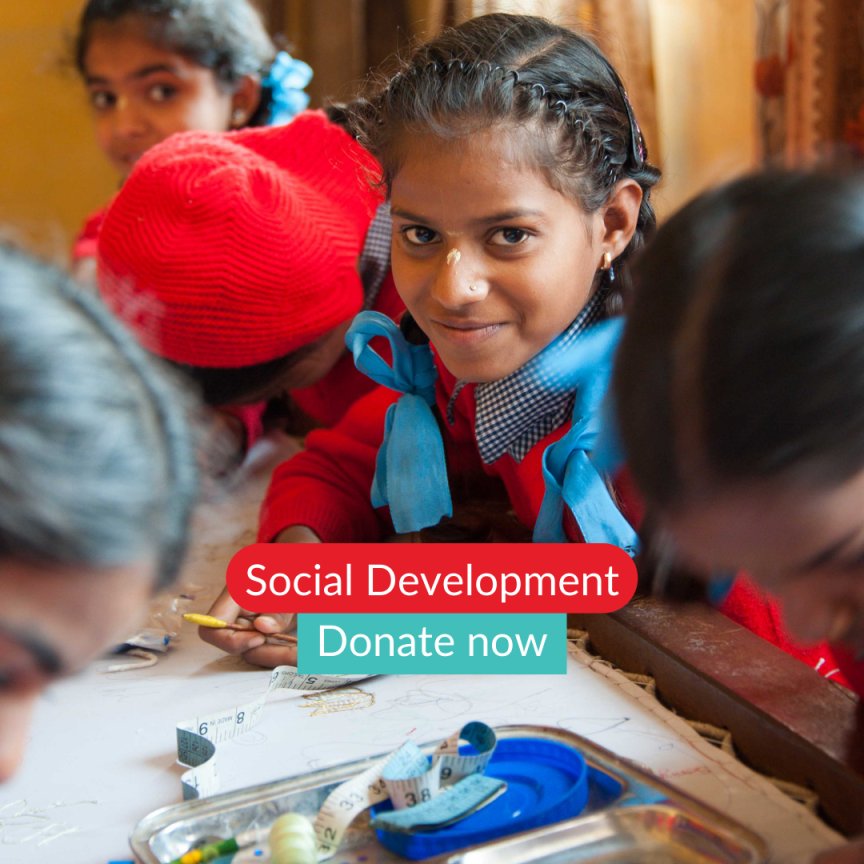
FFLV is running special projects for the social empowerment of rural people: 

  • orphanage
  • adult education centers
  • health care
  • sanitation & hygiene
  • vocational training
  • personal counseling on legal & social issues
  • micro crediting and self help groups (in cooperation with National Bank for Rural & Agriculture Development NABARD and District Rural Development Authority,D.R.D.A.). 

FFLV has plans to work on small scale income generating activities by training the rural people in various skills that are identified by the communities in view of their local resources and marketability of products like carpet weaving, tailoring, readymade garments, etc., composting, sustainable organic farming, and water harvesting.

Empowerment of Women

A central component of effective strategy must be the empowerment of women in ways that enable them to achieve improvements in all key areas that affect their lives and of their families.

Women are the key: Uttar Pradesh state suffers the highest rate of malnutrition in India, in large measure because of the low social status of women. Beginning at a meeting celebrating the International Women’s Day in 2004, The FFLV project has made the empowerment of grassroots women leaders its highest priority.

Food for Life Vrindavan is also collaborating with the Savitri Polytecnic Insititute for Women, New Delhi. 


A comprehensive survey of the villages was conducted and village-level strategy meetings were held with all voluntary workers.  General breakdown and corruption in existing local social structures is a major problem.  Awareness and training camps for village counsel members have been launched to correct these issues.  Self-help groups have been formed.  Women have been selected for vocational training at our centre, and will then return to train others. 

Self-help groups / Microcredits

Women and girls are the most affected by hunger and poverty. Traditionally, women bear the primary responsibilities in the most relevant areas - food production, nutrition, family planning, primary health and education. Ironically, most development inputs continue to go to men. Traditionally, boys are seen as assets to the household whereas girls as liabilities.

Food for Life Vrindavan gives the poor the tools they need to lift themselves out of poverty, providing opportunity through microfinance. With tiny loans and financial services, we help the poor, mostly women, start businesses and escape poverty.
Our network of microfinance has already reached more than 1,000 families in 26 villages.

FFLV has been working with the N.a.b.a.r.d. banks to set up saving schemes. Women deposit their monthly savings in their local bank (some groups have more than 100,000 rupees.)  In an emergency, she can approach the bank and borrow from her group’s savings to manage the household and improve life.  Thus she is spared the all too common mistake of resorting to a loan shark.


The present projection is to promote cooperation amongst the individual Self Help Groups by forming into Clusters (amongst other villages) and Federations (involving the Government Village Administration).


Vocational Training

To help villagers to maintain their families FFLV set up a few practical courses. 35 women from Sunarakh village and 50 women from Ramtal completed a six months training in cutting & tailoring. 

The Sunrakh group is now operating an cooperative society in making ready-made garments and the Ramtal group in making diety dresses. 

FFLV
 has just begun another training course for 50 women in Bari-Atas village.

The extreme contrast between urban and rural India has led to the observation by some experts that there are "two Indias": one of wealth and splendor, and another of grinding poverty and chronic hunger.


The villages around Vrindavan present a grim picture of the latter. Poverty, which in itself is a gigantic problem, breeds many other problems like illiteracy, over-population, child abuse, ignorance, malnutrition etc.

The villages face these problems because their women are uneducated, unaware of their capabilities and are denied of their rights. It is so strange that where women bear traditional responsibility for virtually all areas of life- family health, education and nutrition, they are literally denied the information, skills, resources and freedom of action they need to fulfill those responsibilities. 

Transforming their mentality by providing them training in skills, and making them self-sufficient is our highest priority.


For this we have been visiting villages regularly to talk to the women folks to understand what their needs and problems are. What we found is that the conditions of the women everywhere are same. They are illiterate, having a number of children, poverty stricken, exploited for work, underpaid and living in the most unhygienic conditions. Apart from their house chores they work in the fields as slaves where they are paid Rs. 50/ after working from 7A.M -6 P.M.

Helpless


Shantidevi, Phoolvati, Kirandevi - widows with no one to look after them, sometimes work in the fields, but if no work, they starve or... survive at the mercy of other villagers.

Muni, Seema, Sita, and many more like them of 8 to 13 years of age all married, when asked if they are happy being married they replied: "our parents are." Early marriage robs a girl of the opportunity for full physical, emotional and psychological development.


Moreover decades of research show that child marriages contribute to countless social problems: soaring birth rates, poverty and malnutrition, high illiteracy, infant mortality and low life expectancy. Still the villagers don’t understand this.

Projections for 2009
We are building an orphanage because there are so many homeles children with no one to care for them who should have access to this school aswell! Our orphanage has a capacity for 200 6-16 year olds. We have a small temperary orphanage that holds ten girls while we obtain licences for a larger orphanage for both girls an boys.


Click the following link to see Social Development photo album.


If you would like to help in this Social Development : DONATE HERE


Today is Sunday 01st Aug 10
HOT FFLV NEWS
21. June 2010
India for the Soul
21. June 2010
Habitat for Humanity Project
25. May 2010
Vital mineral distribution to SMS students

Rupa's Diary

FFLV Newsletter (spring-summer)

SMS Newsletter (autumn-winter)

Photo Album

While in Vrindavan
Shop with us!

Wholesome Stores support FFLV Charity
www.wholesome.in